
Compliance3/17/2027Admin User
Health and Safety Essentials: Building an Emergency Preparedness Plan
Emergencies are rare, but preparation is what keeps children safe when the unexpected happens. A strong emergency preparedness plan is required by most licensing agencies—and, more importantly, it gives you and the families you serve real peace of mind.
**Identify the Risks**: Consider the emergencies most likely in your area—fire, severe weather, medical incidents, power outages, or lockdown situations. Your plan should address each with clear, specific steps.
**Write Clear Procedures**: For every scenario, document who does what, where children go, and how you account for each child. Assign roles so no one hesitates in a real emergency.
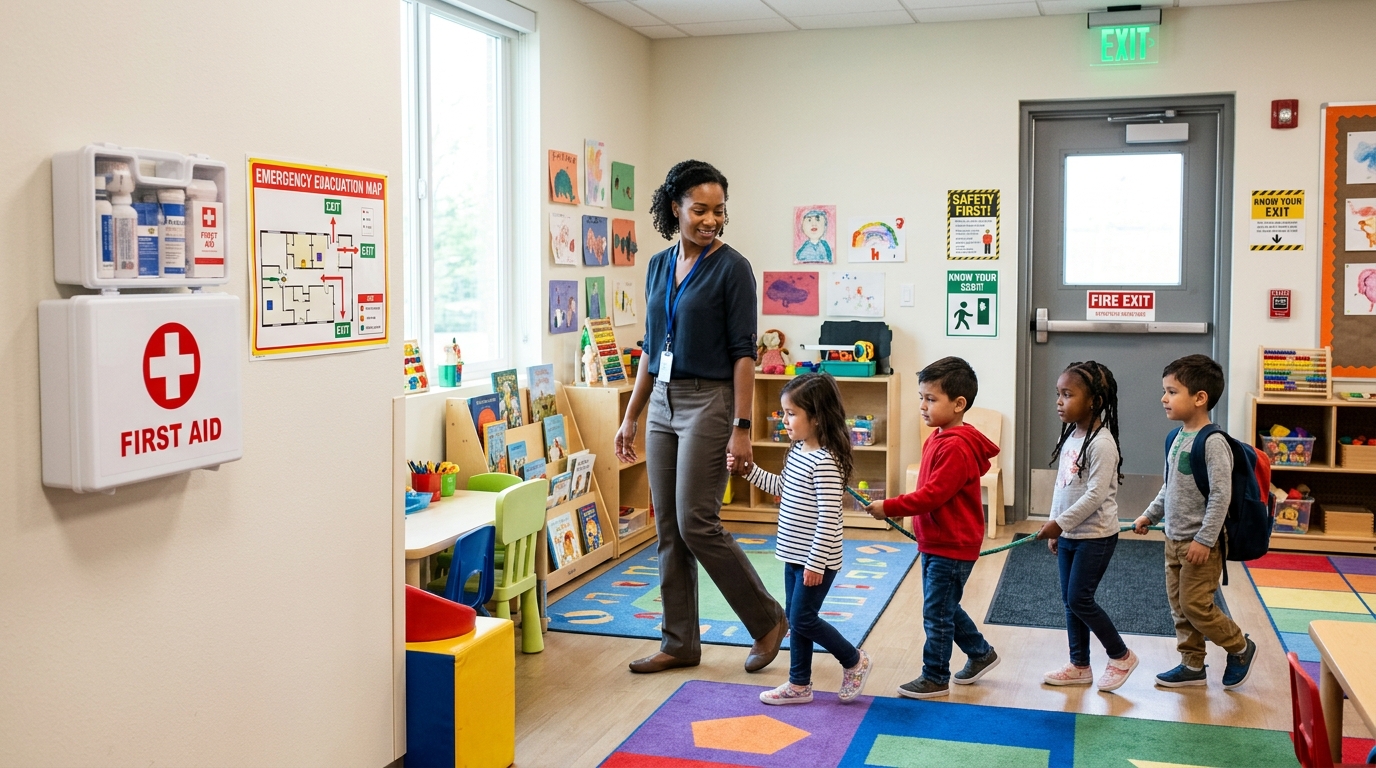
**Prepare Your Supplies**: Maintain a stocked first-aid kit, emergency contact information for every child, a battery-powered radio and flashlights, and a grab-and-go bag. Check expiration dates and restock regularly.
**Plan for Communication**: Decide in advance how you will notify families and reunite children with their parents. A reliable, pre-agreed communication method prevents panic and confusion.
**Practice Regularly**: Drills turn a written plan into calm, automatic action. Practice with children in age-appropriate, reassuring ways, and document each drill for licensing.
**Review and Update**: Revisit your plan at least annually and after any real incident. As your enrollment, staff, and facility change, your plan should keep pace.